
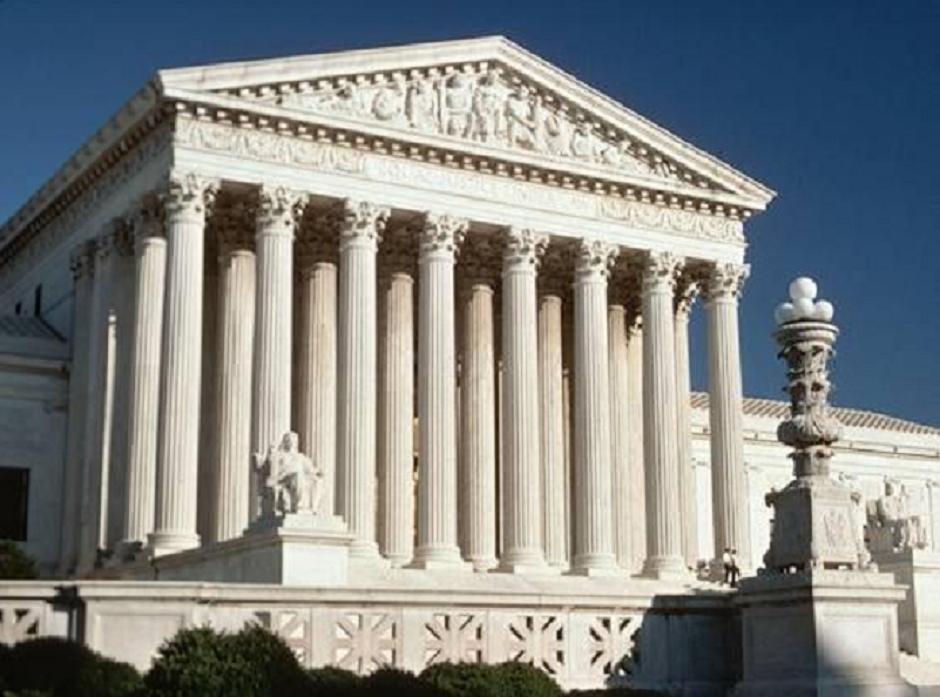
The Supreme Court is set to review both sides of the debate when it comes to the regulation of video game sales to minors, and the State of California has officially turned in its argument (championed by Senator Leland Yee) in favor of regulation. Similar measures have been ruled as unconstitutional in the past, but Yee’s written argument cites many previous court cases, including the United States vs. Stephens, which ruled against a ban of media depicting cruelty to animals.
“Clearly, the justices want to look specifically at our narrowly tailored law that simply limits sales of ultra-violent games to kids without prohibiting speech,” Yee said. “We need to help empower parents with the ultimate decision over whether or not their children play in a world of violence and murder. The video game industry should not be allowed to put their profit margins over the rights of parents and the well-being of children.”
The argument also compares the First Amendment protections of violent video games akin to that of pornography, stating that,“The First Amendment has never been understood as guaranteeing minors unfettered access to offensively violent material. Such material shares the same characteristics as other forms of unprotected speech, especially sexually explicit material…Throughout history, many states have enacted laws that regulate the sale of both sexual and violent material to minors. Such restrictions reflect society’s understanding that violent material can be just as harmful to the well-being of minors as sexually explicit material.”
The argument continues,“This is further reflected in the fact that violence can strip constitutional protection from otherwise protected material. Sexually explicit material that would be otherwise protected for distribution to adults can be considered obscene given the violent nature of its depiction. No rational justification exists for treating violent material so vastly different than sexual material under the First Amendment when reviewing restrictions on distribution to minors…It is well-recognized that the societal values served by the freedom to consume expressive material do not justify recognizing a constitutional right for minors of the same magnitude as that for adults – and this should be true whether the expressive material is sexually explicit or offensively violent…Instead, while minors certainly enjoy the protection of the First Amendment, it is a more restricted right than that assured to adults, who may judge for themselves what level of sexually-explicit or violent material they should consume.”
The video game industry itself remains largely against the legislation, with several high profile CEOs and developers issuing blunt statements on the matter.
Where do you stand, E-Gs? For federal or self-regulation? Politicize your thoughts in the comments section below!
So what is the law that the State of California is trying to pass?
The Right to act on ESRB ratings? If so, I’m all for it… retailers should be punished for selling to minors.
The Right to ban content? That is terrible… and would be taking a giant step backwards. That is Censorship, which you would think California would generally be against, since they are a more liberal state.
I guess I’m a bit confused.
I think everyone involved is a bit confused. The law itself is very muddied, legally-speaking, and could allow a lot of action from the government’s part. I’m not even sure those that wrote it could tell you what it means completely.
What you are then saying isnt just that retailers arent allowed to sell violent games to kids. You’re also saying that kids arent allowed to hear some forms of speach, how is that okey? Its one thing to make it a retailer policy, but making it law is wrong in so many ways. Games could be directly responsible for all school shootings, and this law still wouldn’t be acceptable.
Well, it’s illegal to sell alcohol to minors… same with cigarettes, same with NC17 movies, same with porn.
Children don’t legally have the same rights as adults.
They do have the right to read the label, just not ingest it. Freedom of speech my friend.
Freedom of Speech is not a full fledged right of a minor. It is a bit crazy, but public schools are well within their rights to censor kids, disband assembly, and shut down freedom of speech.
I don’t quite get what your argument is… yet again, I think I’m a bit confused about this whole law.
Ops sorry, I wrote that on my phone and I meant to elaborate when I got home but i guess I forgot.
My point really is that they shouldn’t be well within their rights, child or not, you are still depriving an individual of its freedom of speech. We accept it because a child’s mind isn’t fully developed and therefore it isn’t “properly equipped to decide for itself.”
But that argument is, to be honest; bullshit. The human brain isn’t finished developing until the age of 35 in males and 25 in females, the age 18 cut-off point is useful to some degree, but also slightly arbitrary.
The child guardian is trusted with the responsibility of keeping the child safe, well cared for and educated. Yet we do not trust them to make the simplest decisions as to whether or not things like porn is offensive or destructive to the child. How can a government ask it’s people to trust it when it won’t even trust the people with decisions that are rightfully theirs to make.
Mats, you forget what country you are talking about. A bunch of laws (which happen to be stupid across the board) are based on morality views. Well you also forget that it is this way because the US was pretty much founded by Puritans and other Christian groups that took the bible seriously and cared about what the bible said. Now Fast forward to now and you still have that same kind of talk coming from Republicans and other serious religious minded folk (Democrats and Independents are included in this *Independents are just a lumping of all the different smaller parties in the Us, don’t ask it is stupid if you ask me*).
Now I agree with you, and Drinking should be lowered as well as considering the naked human body as obscene (yes that is really true, I told you this country is messed up). I can’t understand how TV can get away with showing violent content, but when games do it, Parents get up in arms, even though they let their kid watch the violent programs. It is all the parents’ faults that they can’t control their kids, but that is how things have been and always will be. It is also the fault of the Main Stream Media and as well as gaming site too (unnecessarily bashing groups of people *IE “casuals”, as the fad started 4 years ago really and has continued on since; not good journalistic integrity if you ask me*).
Thing is, it’s not just the US. Sure you guys are the extreame example, but when it comes to freedom of speech all developed western nations are basically the same. And most have the age of adulthood set to 18, with all the typical liberties that intails. However, a certian cutoff point is clearly necessary. While ultimately the parent is responsible, the community is also responsible for limiting the amount of damage a bad parent can do to a child, which is why we take child abuse law so seriously. If a parent permits it’s 10 year old child to consume an extraordinate amount of toxins like alochol and tabacco, then that can be a form of child abuse. If the parent does the same thing with violent and pornographic media, than it’s a strange way to raise a child, but it’s not necessarily damaging. Which is why anything that counts as speech should never be lawfully deprived from anyone, of any age.
I think to a lot of parents, pornographic and violent media is considered damaging (yet again, America is made up of a lot of puritans).
But this is sort of getting away from the topic at hand. Right now, Videogames are being put to different standards than their closest media relative… Movies. I am ok with refusing to sell to a minor if the game or movie is mature (a parent can purchase that for the child). Now, if this law holds retailers responsible, I’m all for this law. But if it bans the sale of Mature rated games… that’s extreme… and wrong.
I think the bill just holds retailers accountable. If it bans selling violent Video games period, then I think there would have been more talk about that. If that is true, then expect a lot of backlash from publishers and developers alike.
Oh, and the country does have a bunch of people that are “puritans”, but not the majority any more. However it seems that the people who are in the legislature however are more religious and make the country seem more religious then it really is.