2016-01-07_00003 07 Jan

Less than a year after the launch of the Nintendo 64, the now bankrupt Acclaim came forward with Turok: Dinosaur Hunter. Back in 1997 first person shooters were really starting to come into their own. id Software practically had the corner on the market with Doom, Doom II, Hexen, and Quake. And from 1993 to 1997, the best way to experience a mature and fun shooter was on the PC.

While many people will blindly point to Goldeneye 007 and Perfect Dark as the definitive shooters on the console because of their split screen 4 player modes, Turok was the more direct competitor with id Software’s singleplayer lineup. Goldeneye 007 and Perfect Dark were more A to Z shooters, while Turok not only focused on shooting, but platforming, exploration, and big bombastic weaponry as well.

I purchased Turok on launch day in 1997 and instantly fell in love with it. It had huge jumps, walls to climb, a bow with blue explosive arrows, dinosaurs with missile launchers and machineguns, and it was bloody to boot. It was one of the first games to mandate using the save carts that you’d attach to the underside of the N64 controller. I played the game over and over again, messing around with the infinite ammo, the big head cheats, and more. So with that bit of backstory about the game and my previous experience with it, let’s chat about the Turok: Dinosaur Hunter 2015 remastered edition for PC by Night Dive Studios.

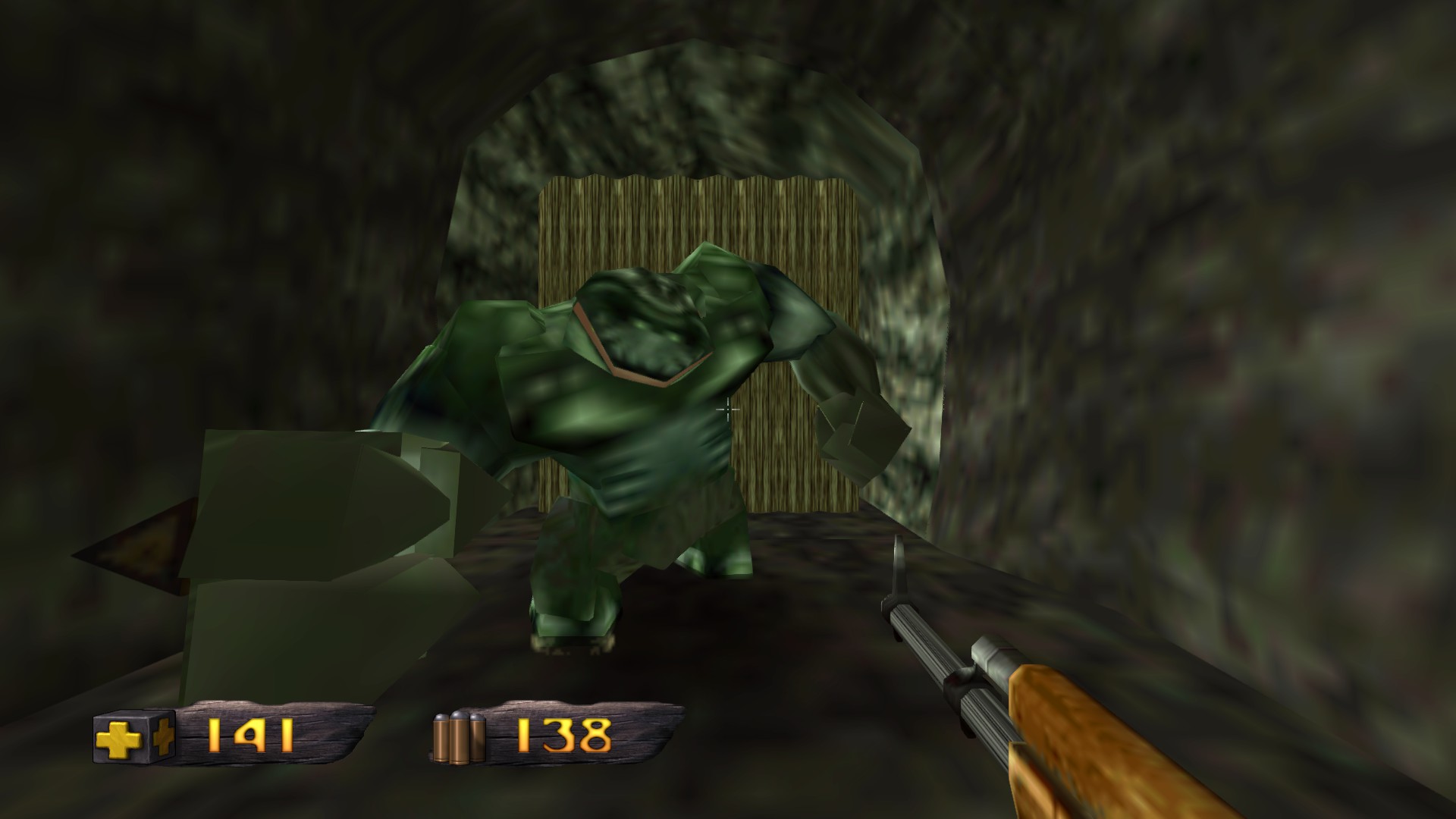
At full price, the game is $20 USD on the Steam store. For a remake of an almost 20 year old game, that feels incredibly steep to me. After flipping through the game’s options, there’s a few new odds and ends added in like an FOV selecter. After some light Googling, the only real enhancements I could find to the game is dynamic lighting, bloom, FXAA (all of which were pretty subtle and I didn’t notice much in my time with the game), support for high resolutions and widescreen–as one would expect from any rerelease, Open GL and vsync support. Oh, and Steam achievements. No new levels. No high resolution textures. So…super light on the feature list.

Obviously on a modern PC, the framerate is going to put the old N64 to shame. And using mouse and keyboard made everything easier from platforming to shooting. Framerate wasn’t a huge problem for the original Turok. Seeing a faster framerate on Turok 2: Seeds of Evil might vastly improve the experience because that game ran like junk on the N64 with and without the memory expansion in the console.

I’m pretty disappointed with the almost total lack of graphical improvements.

But, playing devil’s advocate against myself, perhaps they are going for a more authentic experience, which for the sake of posterity, is pretty important.

If you’re in for a nostalgic trip, Turok will deliver. It sounds great, has some good environmental mazes and puzzles, and it has a wonderful sense of verticality that I completely forgot about, and apparently so did all other modern shooters. Getting to the end of a level doesn’t mean you’re done with it. You need to make sure you’ve collected all the keys to open all the portals to every world. And if you’re really going whole hog, you have to collect the chronoscepter pieces too.

It’s almost comical playing a game with keys, secret areas, and hidden walls anymore. I shocked myself with how many hidden areas I re-discovered through muscle memory. But without video walkthroughs, it might take brand new players much longer to find them, if they even care to find them.

The game doesn’t rely on dumping bullets into sponges and finding convenient places to hide while reloading and healing. Instead, health is medpack and armor-based, and you never have to reload. Something about that fact alone felt oddly liberating. Using weapons in Turok is less about landing head shots and the number of times an enemy needs to be hit before falling. Guns are more like tools for specific jobs. For instance, you wouldn’t want to use the grenade or quad rocket launchers on the high priests. They move around too quickly and the minigun kills them in fewer rounds. At the same time, you wouldn’t want to stand and blast away at a heavy trooper with a pulse rifle. You’re better off bouncing grenades around corners and staying safe.

It’s a polar opposite mindset compared to most modern shooters. And for that, I’d say Turok is worth checking out if you missed it in its prime in the late 90s.

If Night Dive Studios IS going for an authentic approach, there is one crucial element that is a little messed up in the game: that’s the infamous N64 fog. Fogging was a way to compensate for lack of computational horsepower in 1990s games. But some games like Silent Hill and Turok, used that fog as part of the environmental design. The jungles in Turok felt mistier and the caves more dangerous. There is still fog in this remastered version, but it’s much much further away and it hurts the game. Players can see enemies long before they can retaliate and it makes the game less suspenseful, and it also unfortunately makes it too easy.

I had an absolute blast replaying Turok. It was nice to take a stroll down Nostalgia Lane and I do think the game would still be fun for newcomers. It’s interesting seeing the game design mentalities that are used here but have been abandoned by the industry. After completing the game, my initial reaction still holds true. $20 is too expensive for such a barebones rerelease. Whether you’re going on a retro kick or you want to rehash some old memories, I’d say wait for a sale or a drop in price before you go hunting dinosaurs.

Tested on: PC
Developer: Iguana Entertainment, Night Dive Studios
Publisher: Night Dive Studios
Platforms: Windows
Launch Date: November 30, 2015
Review copy provided by publisher
just cause 3 06 Dec

If you’ve been anxious for a vacation where you can kick back with a bottle of whiskey on a lonely beach and watch some boat explode off on the horizon, Just Cause 3 can’t really help you get there, but you can watch someone else live that reality. Over and over again. And again. Every time you start the game, you get to watch this unskippable and unbearably long splash screen. The first time I saw it, I laughed and thought to myself “wow! What an original and funny way to show off the company logos before the game.” And every time I watched it thereafter it just made me more and more frustrated. And once the wait for this super long intro is finally over, I had to wait more while the game took an unnaturally long time to log into its servers. That only leads to the question of “why do you have to log into servers if you aren’t playing a multiplayer portion of a game?” Good question.

And then after that wait is over, you have to wait even more for the game to go through it’s primary load sequence. On my PC, after having it installed on an SSD, that entire sequence takes one minute and forty seconds.

Odd for me to start off my review with a complaint about wait times, right? Well, first impressions are often the strongest, and this is Just Cause 3’s first impression.

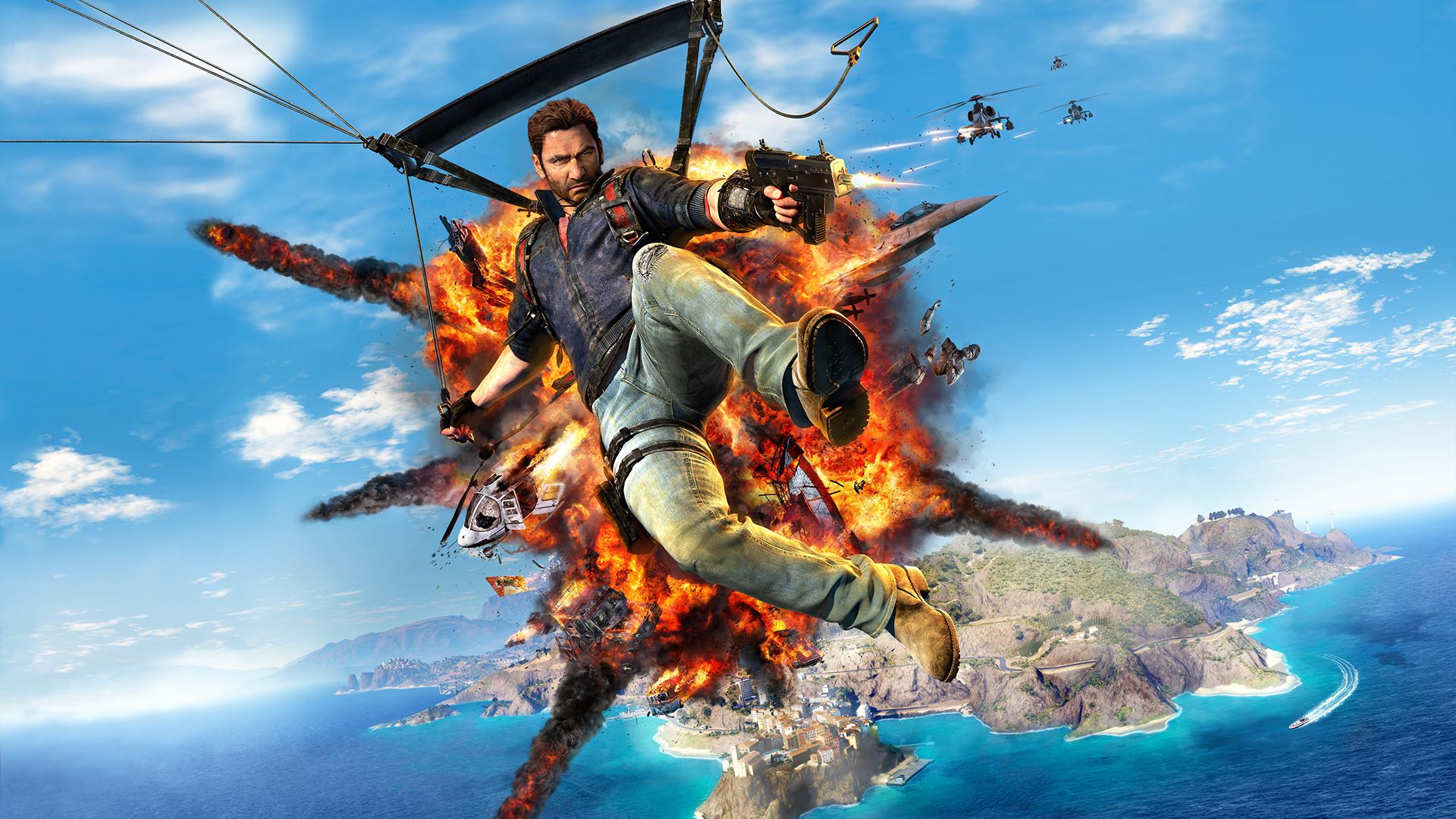
Once you’re finally in the game, Just Cause 3 is a lot like Just Cause 2. That’s not a terrible thing. You play as Rico Rodriguez and zip and fly around a chain of islands using your infinite parachute, a retractable tether strapped to your wrist, a wing suit, and a whole lot of guns. It’s your job to basically blow up anything red. It’s an open world, so how you do it is up to you.

There is a really really weak story about a rebellion being partially led by your childhood buddy Mario (which of course, they couldn’t hold back from an “it’s me, Mario!” joke within the first 10 minutes).

That’s not me knocking the story, either. What I’m trying to say is, Just Cause 3 is mindless. Go here however you want, destroy, go there, destroy. The word “destroy” appears on screen pretty often as though you forgot. Oh! That’s what I do in this game? But I think sometimes all you need for a video game right? Just… mindless fun activities. Flying, jumping, blowing stuff up and in the meantime, make it as pretty as possible. I don’t always need the brooding backstory of some unidentifiable anti-hero.

Aside from the fragile story, the open world gameplay boils down to eliminating key infrastructure from a malevolent dictatorship called DRM. Har dee har har.

When you free cities or destroy military bases, you add more vehicles and weapons to your potential library of instantly available items. It’s an interesting idea, but I never really used the system of calling in for my free gear much. Most of my 27 hours with the game, I just kept going and played with whatever I could find. Because, 1. It’s not like grenades or rocket launchers are hard to come by here, and 2. why drive any car or fly most slow planes or jets when I can essentially fly.

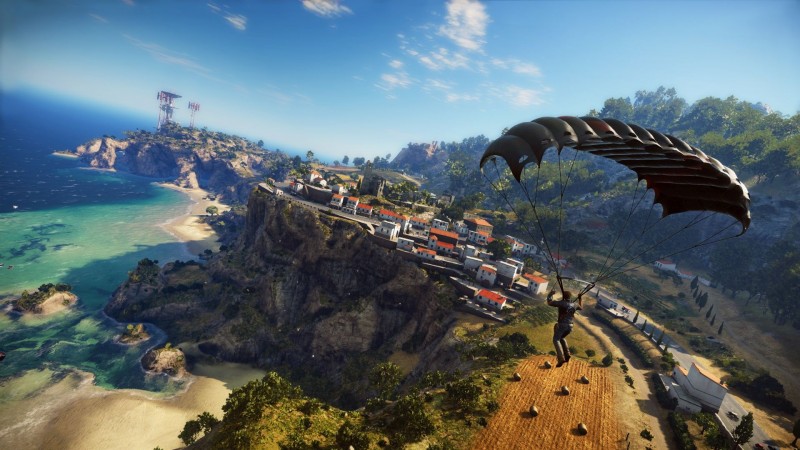
Well maybe not fly, but glide a really really long time. You can cover infinite distance by simply opening your parachute, and then your wingsuit, and repeat the process. And thanks to the game’s extremely liberal physics system you can grapnel the ground and pull yourself toward it while using your wingsuit to cause tension and increase thrust and lift. It’s insanity, but fun insanity. You could do something similar in Just Cause 2 with the parachute, but with the wingsuit you move much, much faster. When you get good at the system, you can even use it to climb mountains.

just cause 3 parachute

You can withstand a ridiculous amount of punishment before dying. Essentially Rico is a comic book super hero. It’s a game of Reverse Spider-man and the Adventures of the Exploding Red Buildings. You’re not swinging down. You’re swinging up. And instead of wearing a cool super suit, the main character sports enough denim to make Chuck Norris jealous. That part’s not a compliment. This new Rico looks like an idiot, and he sounds like everything sexually excites him, not in suave over-amorous kind of James Bond way, but in a “I have serious suspicions about my creepy neighbor” kind of way.

Aside from mindless destruction, there are also a few races and stunt challenges that, when completed skillfully, can unlock what the game calls “mods.” The mods change the way your weapons and equipment behaves. You can make your grenades explode the instant they touch something. You can add functionality to your flight suit by giving them air brakes. You can increase the strength of your tethers. None of this is mandatory, but it does help in making the game more customizable to your unique preferences.

The game world is gigantic. Absolutely enormous. There are islands that are heavily inhabited, and others without any life at all. White it’s neat to climb to the highest point in this little world once, beyond that, much of this space feels like… just dead space. It adds some nice aesthetics, but it mostly feels like wasted potential. There’s some wildlife. A deer or fish here and there, but most of the world here feels barren.

When you’ve wrapped up the game’s main storyline, there is a nice option to continue playing and retain all your unlocks and re-oppress the cities and bases alike through the map menu, so you can keep blowing stuff up… forever. That will keep people playing for while, but for me, once was enough. I might take a look at the game again if and when the cooperative feature comes into play.

But getting back to the DRM. The digital rights management. Not the game’s oppressive regime. It has, more than once, completely broken up the flow of my gameplay. I would be enjoying some bombastic activities like flying helicopters into radar dishes and jumping out at the last second. Hooking people up to helicopters while hanging upside down. Dashing from one jet to another and throwing their pilots out hundreds of feet above ground just to have everything stopped by trying to log into the game’s servers. There IS an offline mode, but the game doesn’t like to stay in offline mode. And it’s not even something you can set up in an option before fully launching the game. It is distracting and annoying and it kept me out of playing the game for several minutes at a time.

I played the game on PC and saw OK performance, but I’m apparently lucky. The developers publicly came forward and addressed several known issues and they’re promised to be working on a patch for the near future. So keep your eyes open for a change log.

It’s hard to recommend Just Cause 3 at full price. The weird DRM servers that are masked as competitive gameplay elements are a hindrance. I truly don’t care who has bested me in any of the game’s activities. But at the same time it IS a fun game. There’s no denying that. I don’t have to worry about names or places series of events. I just fly, or drive, or shoot, or swim, or glide and that feels good. But, like many people, my first experience with Just Cause 2 was after catching it on sale through Steam. I probably paid no more than $10 for it and it was worth every penny. Just Cause 3 doesn’t feel like a big enough change to justify that remaining $50. On sale, yeah, I’d say go for it. Maybe I’m being cheap, but $60 seems a little much for this one.

Tested on: PC
Developer: Avalanche Studios
Publisher: Square Enix
Platforms: Windows , PS4, Xbox One
Launch Date: December 1, 2015
Review copy provided by publisher
battlefront 24 Nov

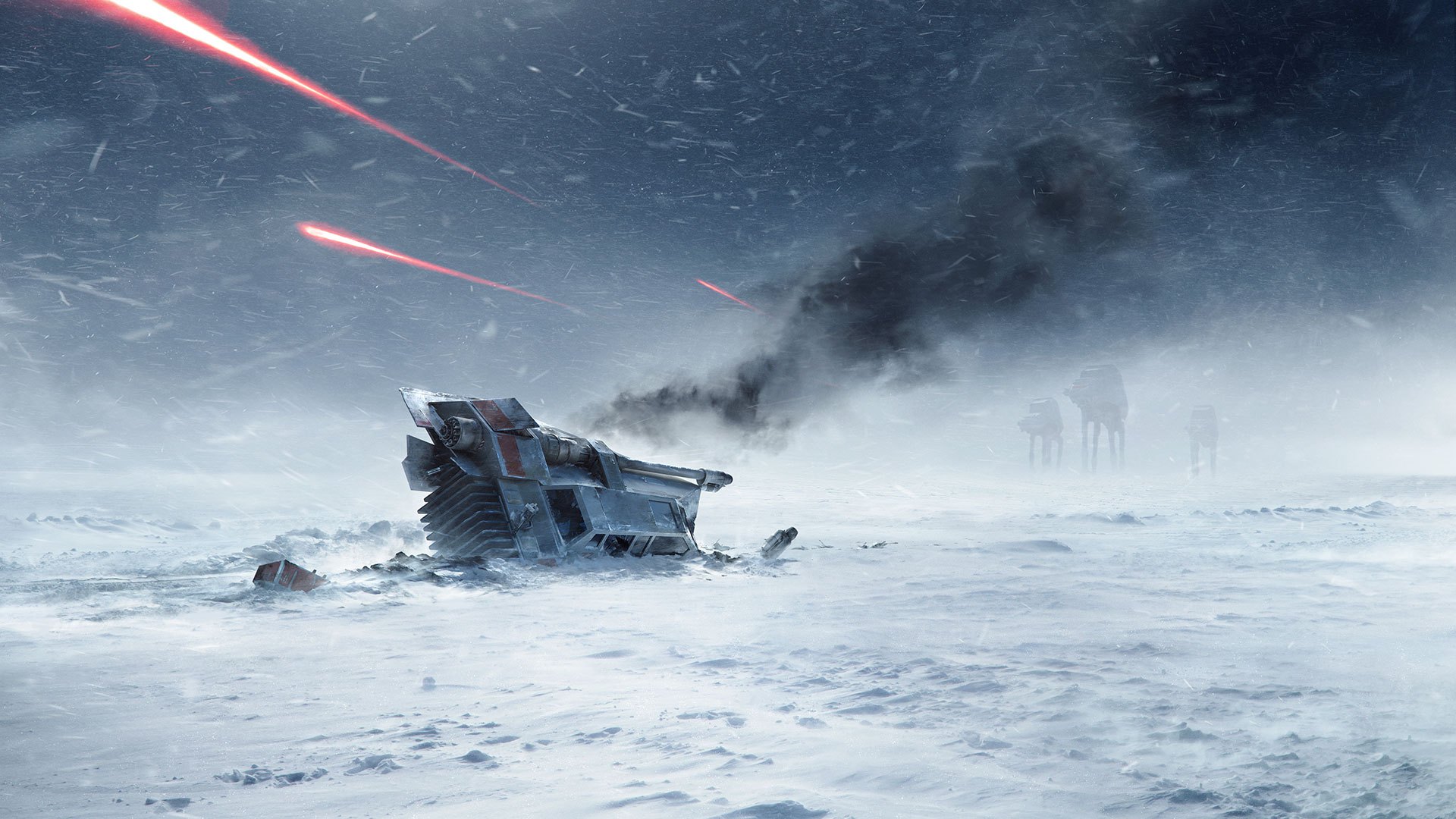
So I’ve put a solid week of some pretty intense gaming into Star Wars Battlefront. To be honest, I sort of had my fill after the free beta weekend, but it has been a long time since my brother and I played something together. We both picked up retail copies and played the final build on real servers vs. the general public. And as lifelong Star Wars fans, I think it’s safe to say that we both had a great time playing together in that galaxy far, far away.

But questions remain: how much did we enjoy that experience because we got a chance to live Star Wars nostalgia, and is that nostalgia worth $60?

If I’m being blunt? No, I don’t think the game is worth $60. Is it fun? Absolutely. It’s gorgeous. It sounds amazing, but if I were to describe the entire experience with one word, I’d go with “shallow.”

Shallow in the fact that, though there are a good number of game modes, there are essentially only 4 maps to play on. And that lack of variety takes effect pretty quickly as you play. The phrase, “oh we’re on this map again?” has probably been said aloud countless times this week by players across the globe. But EA has more maps in the pipeline. They’re just guarded by a hefty season pass price that costs as much as the base game. $60 for the core experience. $120 for the ultimate edition. That’s a fairly standard price point for EA and DICE’s Battlefield series, but that doesn’t mean it’s inexpensive or worth it.

Battlefront is largely multiplayer-only experience. There are a few game modes where you can practice the game’s basics like power-ups and flying in training and survival modes. But you’re looking for a single-player experience or if you’re tempted to pick up Battlefront to only enjoy the non-multiplayer modes, you will be sorely disappointed. And a grand opportunity has been missed here by leaving out a single player portion of the game.

The common response to this statement is always “but DICE never makes good single player games.” That doesn’t mean they shouldn’t lose points for not even trying. Star Wars fans have been starving for a quality, new game for a while now. The maps are gorgeous. The sound effects are stunning and everything feels like a legitimate Star Wars experience. But you never get to fully take in the beauty of each map. Without a single player campaign to allow players to appreciate the quality worlds, you’re stuck rushing from point to point avoiding the blaster fire of your enemies and are subjected to the commentary of whiny, foul-mouthed racists. Sort of sucks all the Star Wars right out of the game.

The multiplayer game modes available are Supremacy which is a tug of war of control points on a large scale. Walker Assault is similar to Rush mode in past Battlefield games. Players Fight over progressive control points using both ground and units (except for on Endor where air units are unvailable). The Empire tries to keep the walkers alive and healthy while the rebellion tries to shoot them down. Fighter Squadron is probably one of the best new modes the series brings to the table. Two teams of 10 fight it out in the skies using X-Wings, A-Wings, TIE Fighters, and TIE Interceptors while the Millenium Falcon and Slave 1 act as hero units. Blast is standard team deathmatch. Cargo is capture the flag. Drop Zone and Droid Run are control point games where the contended locations are constantly changing. Hero Hunt let’s you play as one of the Star Wars main characters as you try to kill as many troops before being brought down. And Heroes vs. Villains pits two small teams of heroes against one another.

There is no server browser. Initially that doesn’t sound like such a horrible thing. After all the game did a fairly good job of putting me into servers where I didn’t have any issues with lag. I only had problems finding matches once or twice, but that’s to be expected with a new release. Considering this lackluster launch, I expect to see a lot of empty servers in the not too distant future.

Without server browsers it immediately eliminates any possibility for unique modes of play that only add to a game’s longevity. For example, older Battlefield games used to have pistol and knife servers for people who wanted to play something up close and frenetic. Blatantly missing from this game is a hardcore mode with friendly fire enabled and deadlier weapons. There’s no way to mandate player perspective. The game could really benefit from dogfighting servers that force cockpit view. As it is, anyone who is flying their fighters from inside the cockpit is at a massive disadvantage to people who are flying in third person point of view. And it’s a shame too because the view inside the cockpits is actually really cool, but it’ll never be used. No server browser will be a deal breaker for a lot of long-term shooter fans out there.

The game has a super short learning curve which is both a detriment and a benefit to the game. Players who have only been in the game for a few hours are as lethal as players who have put in 30 hours, and that’s due to a few factors. Powerups are random on the field and they are accessible to everyone. And as you progress in the game, you unlock new weapons, but there are few guns that are clearly superior to the others, but a strong case could be made for saying the DL44 is the best.

Otherwise, once you’ve unlocked the game’s weapons, the rest of the game’s purchasable items are cosmetic unlocks. They aren’t even GOOD cosmetic unlocks. I understand perhaps wanting to customize how your rebel soldier looks since they don’t wear helmets, but picking and choosing a face for the stormtroopers seems pretty silly to me. The cosmetic unlocks could have been for cooler items. Color accents on the armor, perhaps making some pieces look battle damaged. Maybe even changing the color of your X-Wings and A-Wings stripes or nose art for your fighters. I wouldn’t mind a cosmetic system, but these unlocks are boring.

While I’m on the subject, at the end of each round the game “converts” your experience to credits. What? Why the need for some conversion? Just give me the credits. Or just let me spend experience points on items.

Autobalance either doesn’t exist or is a total joke. You will see teams absolutely dominating the field with the top 3 to 5 scorers all on one side and the game never breaks them apart. It’s a pretty regular occurrence and honestly, shouldn’t be happening in a modern shooter.

Speaking of balance, balance is without a doubt the game’s biggest setback. Walker Assault as a mode is very fun and super cinematic which is what will bring players back again and again, but most battles are completely one-sided. Many maps are rampant with blatant spawn killing, and at times the gameplay devolves into a grenade spamming contest.

And in the skies, the rebels have a clear advantage. Their fighters have 2 recharging abilities. A homing missile and a very long lasting shield which blocks all blaster fire (but not missiles). The Empire’s abilities are a homing missile, and a speed boost which… does nothing… It’s not wildly unbalanced, but either the empire needs stronger blasters that will take down rebel ships in fewer shots when their shields are down, or quicker recharging missiles, or, since this is technically an asymmetrical game mode, give the empire a few more ships on their side. The Slave 1 will tear through little fighters, as will the Millenium Falcon, however, clever pilots have discovered that by popping on the Falcon’s shields, they can simply ram the Slave 1 out of the sky without taking any damage. That’s gotta be fixed. I’d definitely say that both hero ships need to be scaled back, bigtime.

When playing on the walker assault maps, newly spawned starfighters are still ultra vulnerable, just as much as they were during the beta. It’s really a shame DICE didn’t do anything about this in the interim.

And while I’m talking about aerial fights, in a series called “Star Wars,” it is laughable that there are no fights in space. It’s not “Sky Wars.” Why aren’t there fights over either or both of the Death Stars?

In the end, the game is still fun, but asking $60 for a product that feels like it’s been mined to its core doesn’t feel right. If they said $40 for the base game and $30 more for the season pass, I might say go for it. But as it is, it’s an OK game that has a few neat modes that is REALLY riding the wave of Star Wars hype at the moment. The negatives here weigh as much as positives. For every time I was wowed by the action going on around me, I found myself supremely frustrated by what the game lacked, or what was out of balance. I predict this will go the way of Titanfall and sell for a fraction of the cost not long from now. And it’s a shame, too. So much more could have been done with it.

Tested on: PC
Developer: EA Digital Illusions CE
Publisher: Electronic Arts
Platforms: Windows , PS4, Xbox One
Launch Date: November 17, 2015
Review copies purchased with personal funds