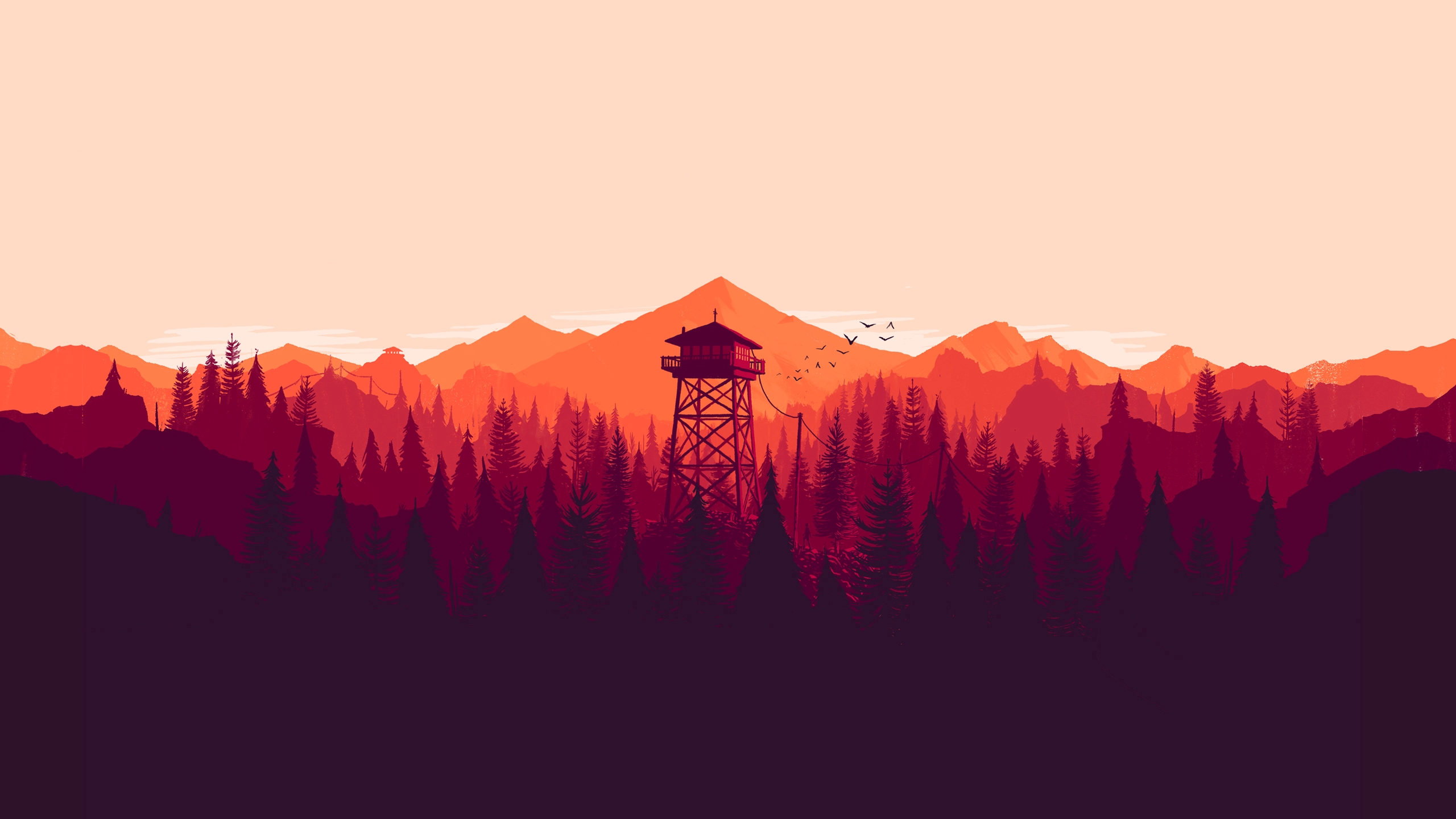
Firewatch started as an amazing experience. Beautiful visuals. Engrossing story. Captivating characters. A romantic escape into a fictional universe based on a real one wrapped around an unnerving mystery begging to be solved. Plus I found a turtle and named him Turt Reynolds.
But then about four hours into my five hour run with the game I thought, “oh… that’s it?” And then it ended.
Set in 1980s Shoshone National Forest in Wyoming, players take on the role of Henry a fire lookout assigned to his own station. His boss and coworker, Delilah is the only other person he has direct contact with on a daily basis, and she’s just a voice on the other end of a walkie talkie living far away in another tower. Their job is to keep an eye on the forest and report any fires, and prevent campers from starting new ones.
Like the other recent stylistically unique indie game, Oxenfree, Firewatch is not an action-based adventure game, but a dialogue-based one.
It’s a very nice concept.
Various problems arise within the forest and it’s up to Henry to address them, and while he is off trekking through the woods, he talks about his past and his decision making process to Deliliah on the walkie. The forest is huge and can be explored at your own pace. And it is gorgeous. Desktop and phone background-type gorgeous.
And the banter between Delilah and Henry is spot on. It might be some of the best voice acting we’ll see all year. Their relationship swings between professional, to friendly, to flirty, and back again all without the usage of facial expressions or body language. My emotions were swinging with them. As I explored the forest and became increasingly familiar with my surroundings, I was absorbed into this life.
And then, someone starts listening in on the conversations.
I would never call the game scary, but it does get tense.
Activity in the game is on the minimal side. There’s no fighting. There’s no quicktime events. You follow your map from A to B to C and just traverse the environment carrying on a conversation with Delilah. You don’t have to worry about health or inventory management or getting tired from running. It’s a very down-to-the-essentials type of experience.
The whole world meshes so well: the forest, the isolation, the clever and believable dialogue, the excellent soundtrack, the sinister nature of someone else watching. But in the finale, the big story reveal doesn’t hold up and essentially took the wind out of my sails, so much so that I got frustrated. The life Henry left behind was more frightening than his life as a fire lookout. I realize there’s a sort of cleverness to that, an escapist playing the role of an escapist, but it just felt like a missed opportunity. I don’t mind that the game never got “scary” but the amount of tension built up wasn’t proportional to the emotional payoff.
As a story-based game I can’t see much room for replayability. Like Heavy Rain and Oxenfree, it’s hard for me to go back into this world knowing what the outcome is. And that makes me sad.
The game ran fine on my machine. I never crashed. I didn’t run into any weird performance issues. The occasional invisible walls irked me, but they by no means ruin the game. On PC, there is a feature where you can take photos with a disposable camera and then upload to a website to order actual prints sent to your home. $15 for a set of 24 4” x 6”. I personally would never buy them, but I thought it was a clever little idea that you won’t find in any other game and either intentionally or unintentionally puts you back in the 1980s again waiting for rolls of film to develop.
This is a tough one to call. I know it should be about the journey and not the destination, but it’s hard to say that when the destination makes you feel like the journey wasn’t worth it. Great world, good concept, amazing voice acting, beautiful visuals, but the story is what slapped the ball out of my hands… and then deflated the ball… and then dropped the ball at my feet and walked away. But subjective criticisms about the story aside, for a five hour experience at a $20 price tag with little or no replayability, I don’t think it’s worth the full price.
Tested on: PC Developer: Campo Santo Publisher: Panic Platforms: Windows, PS4, OSX, Linux Launch Date: February 9, 2016
Review copy provided by developer
Ubisoft held a closed beta weekend for The Division. In terms of beta previews and tests, it was certainly on the small side, but for what it was, it was legitimately fun and shows a lot of promise. And it shows a lot of confidence that Ubisoft is allowing press and non-press alike to speak about it openly. It also pointed out a few issues with the game that I hope won’t be represented in the release build.
Is it close to what was teased so brazenly at E3 2013? Absolutely not. So don’t get your hopes up for something that revolutionary. What was shown this weekend still fits a need in the video game market, so don’t write off The Division until the full build releases and most of the reviews start rolling in.
After my time with the game, I’m more on the fence than ever. This could be a smash hit or a flub.
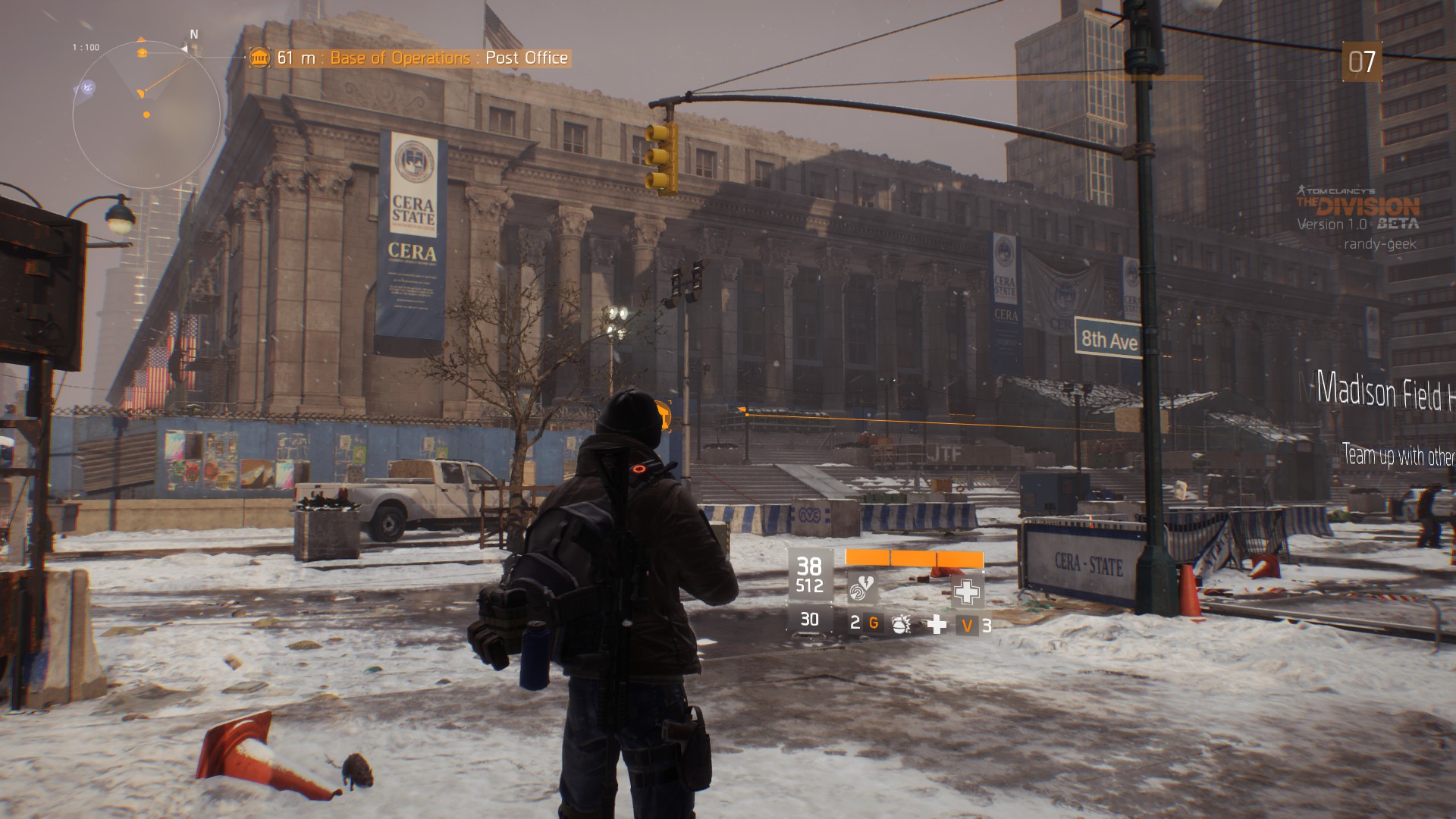
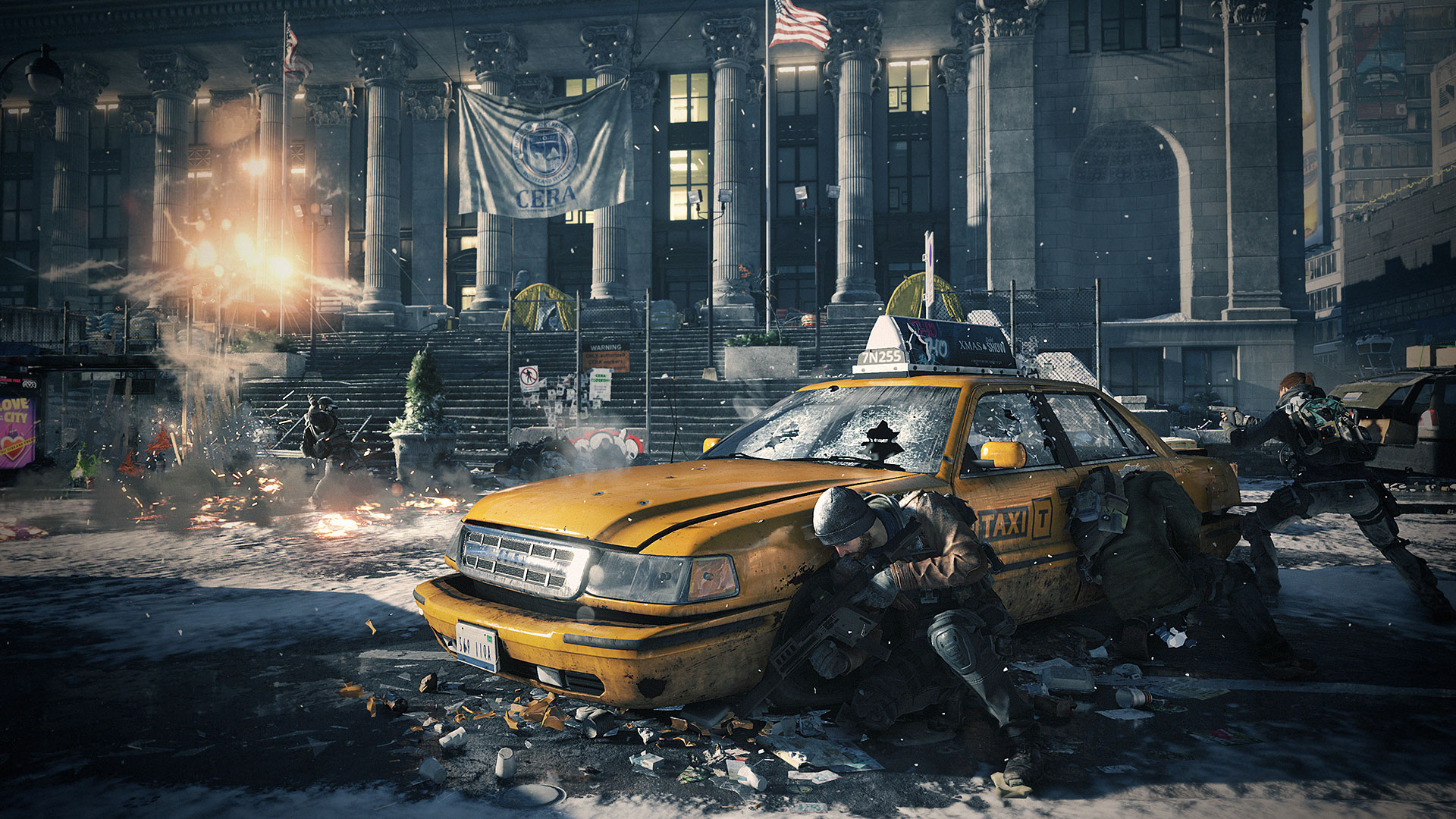
The Division has you playing as an agent charged with rebuilding order in New York after a near apocalyptic event. The game is essentially split into two different modes that work seamlessly together. There is a player vs. environment section of New York where you explore and fight against enemy NPCs alone or cooperatively with friends. There are instanced missions in specific buildings where you can team up with other players through a matchmaking system. Enemies drop loot and grant experience that you use to build your agent how you see fit.
It’s a 3rd person cover shooter with RPG elements, so the simplest way to think about it would be to mentally combine Watch Dogs with Destiny. The Division uses a cover to cover scoot mechanic that was introduced in Splinter Cell: Conviction. From what I could see, there isn’t a stealth system, per se, so building a stealth class seems to be out of the question which isn’t disappointing, but a little surprising considering they are both from the Tom Clancy franchise.
As a shooter, the enemies are on the bullet spongey side, but they can also deal out damage pretty quickly. No question, it’s odd for human enemy types to be this resistant to bullets and looks a little out of place, but it doesn’t feel bad.
As a Ubisoft game, it’s also open world. You can explore the streets of New York at your own pace. Doing so will lead you to finding new trinkets and gizmos like cosmetic changes for your character or finding supplies to upgrade your base.
Your base–which is set in the single player portion of the game–is where you can spend materials on upgrades to your tech, your medic station, or to your defenses which in turn unlock skills and perks for the player. During this beta, only one of those trees was open, the medical one, so it’s tough to say if players can, with enough time, maximize all three branches, but only select a set number of skills, or if players need to create new characters for each branch.
Here you can also pick up new missions, buy and sell gear, and manage your extended storage.
For a Ubisoft game, the single player portion of the game is on the light side for this beta. In the past even I have criticized Ubisoft for just dumping junk all over their maps, but here I feel like the single player portion of the map is on the empty side. There weren’t that many enemy encounters. There was only one real mission to complete. And as far as goodies go, I can only say I found a neat hat and some random cosmetic items. There were a few side missions that showed off some more potential, but, again, for the size of the space given, it was light on the activity.
Which lead to another concern I have about the full launch. With so little to do (and no real means of transportation), I can see that walking from one part of town to the other will get quite boring. Comparing it to Destiny or Borderlands (other hybrid multiplayer shooter experiences), those games gave you speeder bikes and road warrior cars. Digging through the menus, I couldn’t find a fast travel system to cut down on the schlepping. There IS a small fast travel system meant to port you to the mission location, but not one that takes you to your base, or to the entrance to the Dark Zone.
The Dark Zone is the unregulated wild section of New York. There are other players searching the same buildings you are which leads to some unique experiences. You can team up with other players, and I had a GREAT time chatting and playing with random people. We cleared floors as a team. Gathered goodies as a team, and watched each others’ backs when we put our items onto helicopters for extraction.
However, when you’re not on a team, friendly fire is OFF. Stray bullets hitting other players can mark you as a rogue agent. Or, you can just intentionally start a fight with other people. Players can get malicious, too. So if you want a pvp-less experience, I don’t think the final build of The Division will offer that.
Enemies are much stronger in the Dark Zone, so you have to be more careful about how and when you want to engage in a fight. And if you’re alone, you also have to watch your back all the time. But, the stronger enemies also drop better weapons and armor than the single player portion of the game, so while venturing into the Dark Zone doesn’t have to be your core experience, it will definitely be enticing enough to take your chances.
When you pick up a new item in Dark Zone, you can’t simply carry it back into the single player portion. It needs to be extracted via helicopter for decontamination. Then it’s placed into your storage box back in your base. But if you’re killed by a rogue agent, he or she can take some of your items. So, careful extraction is also something to worry about.
It’s actually a pretty clever system that will be fairly unique to The Division. My concern about the Dark Zone is that in this beta, the enemies spawned a little on the slow side. My first two visits into that portion of New York were entirely fruitless. I didn’t see a single enemy NPC. I got shot and and took down a few rogue agents, but personally, I’m not interested in a pure pvp experience. You can find that pretty much anywhere.
It also lacks structure, which is both a massive benefit, and a huge detriment. I hope there will be missions that can be accomplished within the Dark Zone, even if it’s very MMO-lite. “Hunt down X member of group Y.” “Explore zone Y.” Something that will funnel players together and focus their efforts.
But what is interesting is the two zones have completely different experience levels and currencies. The money you get outside the Dark Zone, can’t be spent inside. And the levels you gain the Dark Zone, mean nothing to your overall level outside.
Graphically, the game looks nice and ran well enough on my GTX 970 and my aging i7. The sound wasn’t as rich as I was hoping (another disappointment from the E3 presentation).
But all in all, I had fun with The Division. A lot of fun. But it is still entirely too early to say whether or not the full build will be worth the cash. It’s still bubbling with potential and is poised to be a truly remarkable cooperative experience, but a lot can go wrong. For now, I’m looking forward to testing out and reviewing what the game will be, and trying to forget about what the game was teased to be.
Tested on: PC
Developer: Ubisoft Massive
Publisher: Ubisoft
Platforms: Windows, PS4, Xbox One
Relaunch Date: March 8, 2016
Beta access provided by developer
It’s always best as a critic if you can secure an early copy of a game to review before it releases. The obvious benefit from an outsider’s perspective is that an early review nets more views. But the not-so-obvious and more important reason is so that the critic goes into the experience as fresh as possible without an influence of opinion from an outside source (accidental or intentional).
When I go to review a game, especially if I get a copy late or if I purchase the title with my own funds, I avoid as many reviews and trailers as possible. Earlier this week I grabbed my cup of coffee and started to pour through my emails and visit my favorite internet news aggregation web zones and I was accidentally exposed to a few critics scores for The Witness. It was unavoidable. It was loud and proud and it was everywhere I looked.
Seems as though The Witness received perfect scores from a few reputable sites and very high marks from others. I’m human. I love games more than the average bear. My excitement level instantly went up.
A perfect game? That’s not just a “very good” game. That’s the kind of game you skip making dinner for and order takeout. That’s the type of experience that keeps your eyes on the time, hoping that 5 o’clock and freedom rolls around quicker. Time moves slower when you’re not playing it, and it flies by when you are. You say to yourself “just a few more minutes” and the next thing you know you’re neglecting your sleep schedule. That’s the kind of game that draws in newcomers not just to the genre, but sometimes to video games as a whole! Perfect games are talked about for years.
I wasn’t expecting that kind of experience from The Witness. But hey, maybe I should have set my hopes a little higher.
Nope. They were right where they needed to be. The Witness isn’t that kind of experience. And it’s another reason why I hate scores on video game reviews. At times even my own little “worth buying / worth trying / don’t bother” tally irks the hell out of me.
While it’s clear from a technical and even an artistic standpoint that Jonathan Blow has achieved something really special with The Witness, but the game is mired in some rather sizeable issues that I feel knock it a few pegs down from perfection… or even near perfection.
And it makes me wonder, “what the hell happened?” And I don’t mean with the game. The game is fine. I mean with the reviews.
Obviously everyone is entitled their own opinions and I don’t fault anyone for enjoying The Witness. If The Witness happens to be your new favorite game of all time, I’m honestly happy for you. That is a great feeling when you find a game that almost seems custom made for you.
It’s just that The Witness is the latest and probably one of the most blatant victims of Launch Hype Sickness. It’s not Jonathan Blow’s fault that people are so excited for his work. In fact, I admire him. He’s clearly a very talented, brilliant individual who is not only brave enough to put his own work out into the public to be judged, but he pumped his own cash into project, so much so he allegedly put himself into debt despite the massive success of his previous game Braid. That’s real bravery.
And as a critic I feel uncomfortable criticizing other critics, but I’m getting rather tired every AAA or popular indie developer game that’s moderately fun and doesn’t have any immediately glaring technical issues automatically gets a 9 or higher. It’s a safe approach for critics. And safe is… cowardly.
Once the launch hype dies down, and the anti hype wave kicks in, there’s another batch of critics who wait to see what the consensus of the common gamer is. Then it’s a simple matter of parroting popular opinions to have a review worthy to stand the test of time. Afterall, if you’re late to the watering pool it’s practically suicide to form a legitimate opinion of your own, put yourself out there a little bit and praise something that others have condemned or perhaps find real fault with something others have overlooked.
Everyone loves an echo chamber.
My opinion on The Witness? I enjoyed my first hour of it. It went downhill pretty quickly after that. From a technical standpoint, the game is stable and if you’re a true diehard puzzle fan, then I would recommend you pick up The Witness. Everyone else? I’d say hold off.
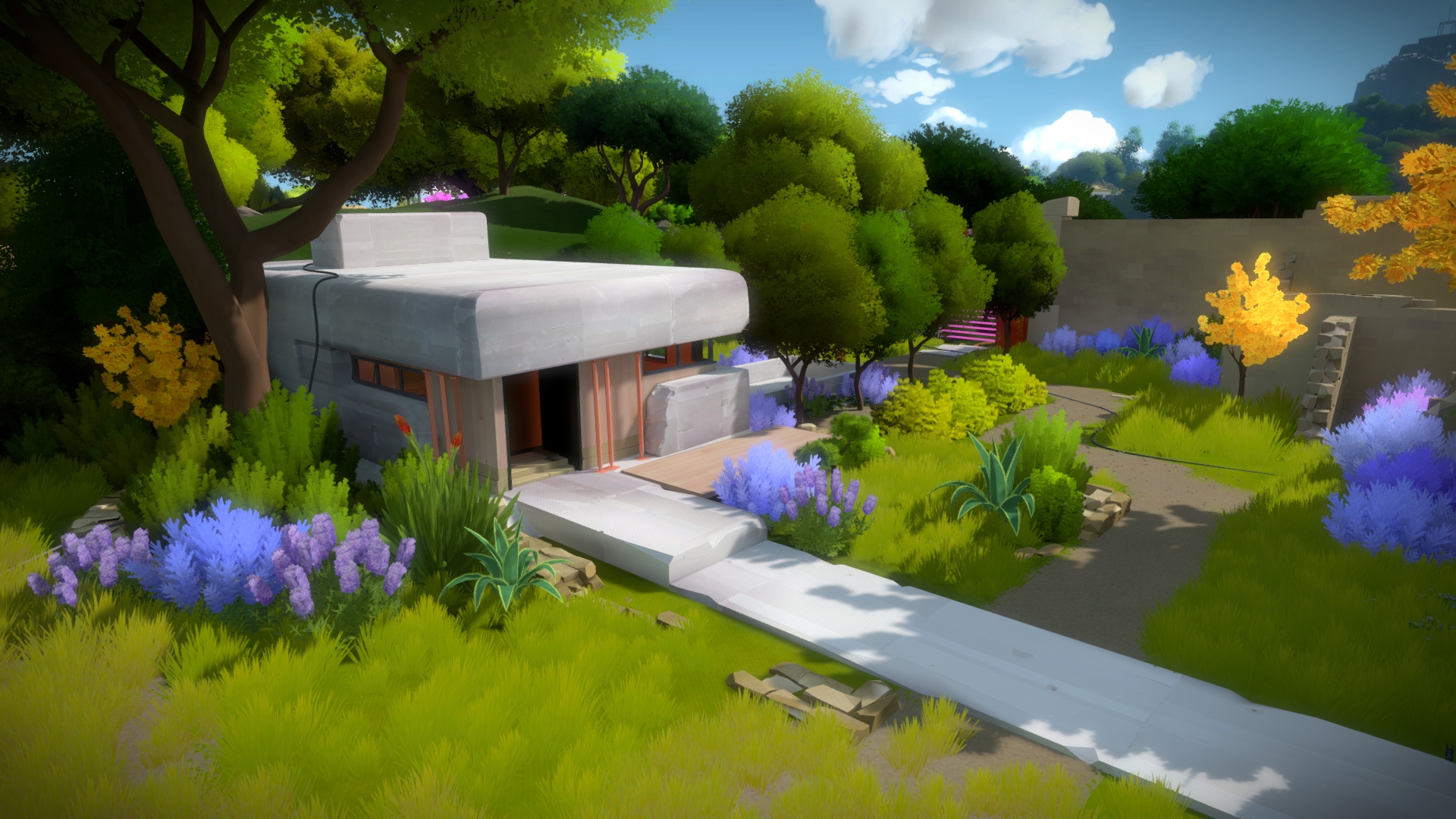
The game is set on a gorgeous island with every tree, rock, building and pathway placed with the utmost care. Each dab of paint and drop of color, no matter how initially perceived as meaningless has been painted on with the precision of a master. The island environment is the greatest achievement within The Witness. The more puzzles you solve, the doors of your perception open wider and wider. And for that I appreciate, understand and fully recognize the genius that has gone into making this game.
But that’s not all it takes to make a good game.
The pessimist could look at The Witness and claim “it’s nothing more than line puzzles set on a pretty backdrop.” While incredibly negative, there’s truth to it.
The Witness lacks what puts other brilliant games into what I would consider the 9 and 10 categories. Its critical flaw: it doesn’t inspire the player.
What is the reward after players take risks? What is the fun mechanic that keeps people coming back? What is the sexy refrain that gets stuck in your head?
In a video game, players get hooked on a sense of achievement, a sense of discovery, or by being properly motivated through reward. Good games do all of these things. The Witness doesn’t do any of these things.
If the driving factor is to complete all the puzzles, then it is here that I would certainly quote the pessimist. They are simply line puzzles. No matter how they are spiced up by hiding them or using forced perspective to solve them, it’s a super simple game mechanic. And it’s not the game motivating the player. It’s the player motivating him or herself. If you like line puzzles. Then you may like The Witness. If you don’t, there’s nothing here to change your mind or push you to continue.
But what about discovery or reward? I had access and could see most of the island within my first hour of play. I’m a sucker for traipsing through digital virgin soil, but my sense of discovery tapered off very quickly. It is a gorgeous land to walk through, and though I didn’t particularly enjoy solving the game’s line puzzles, I did enjoy finding the hidden ones even if I couldn’t solve them.
On the island, players can find hidden audio messages. The messages are sort of interesting to listen to, but I feel they are one of the game’s setbacks or at least, they are a huge missed opportunity. Instead of leaving sizable exotic clues to some greater mystery, most messages ramble about mundane affairs. When added all up, perhaps they do lead some greater truth. But the many I found certainly weren’t titillating enough for me to care to find more. The reward within these discoveries is far too small.
In fact, I’d go a step further and say that the reward for many of the game’s risks is a punishment. Perhaps that was intentional on Blow’s part. I spent hours trying to solve some of the game’s more difficult puzzles only to be rewarded with a scrap of paper inside an otherwise empty room. I held onto hope, however. The paper was a clue for me to later reveal its purpose. Hooray! A mystery that I was about to solve!
When I plugged the solution into its home on the island I was ready for The Witness’s great reveal. Or perhaps a taste of the reveal. Who is my character? What is he or she doing on this island? What is this island? What I was awarded with were some of the most pretentious videos I’ve ever seen in a video game that added no apparent exposition, and didn’t satisfy my curiosity. In fact, I felt like I had wasted my time.
The greatest discovery reward the game offers the player is figuring out through trial and error the unwritten rules of the line puzzles. Each section of the island is designed to submerge the player into specific rules by slowly increasing the difficulty and eventually mixing all the rules together in advanced puzzles. In time walkthroughs will have the solution to every puzzle mapped out for future players, however, by using a walkthrough, players will rob themselves of that discovery, and will also weaken their ability to advance on their own. I have no doubt that The Witness will be too difficult for many players. It had almost bested me at times.
There are other issues with the game. I personally felt motion sick from playing and had to take a lot of breaks. Initially I prayed for an FOV slider, but later came to the realization that an FOV slider would very literally break the game. So much depends on precision placement of the player camera.
There are core puzzles that require the use of hearing, so if you’re hard of hearing, you may have a difficult time.
If your monitor or television screen is on the older side or doesn’t have great contrast, some puzzles will be near impossible.
And there are some puzzles that even after staring at my own solution that I forced into the workspace, seem to break the game’s own rules, or at least the rules as I believe them to be, particularly the puzzles using tetris pieces.
The Witness didn’t motivate me. I felt almost no urge to continue playing. My personal motivator was to complete the game to properly give a review, and after my first hour I wanted to discover why it got near perfect scores. I became tainted by an outside opinion. Clearly I was missing something, right?
The Witness is not a bad game even though I personally dislike it. Part of me was unintentionally overexcited for a game I thought would smash down walls. It’s an above average game built by a brilliant mind with caring hands for a very specific audience in mind.
Want to know if you’re a part of that audience?
Answer me this question: do you like line puzzles?
Tested on: PS4 Developer: Thekla, Inc. Publisher: Thekla, Inc. Platforms: iOS, Windows, PS4 Relaunch Date: January 26, 2016
Review copy provided by developer