25 Dec

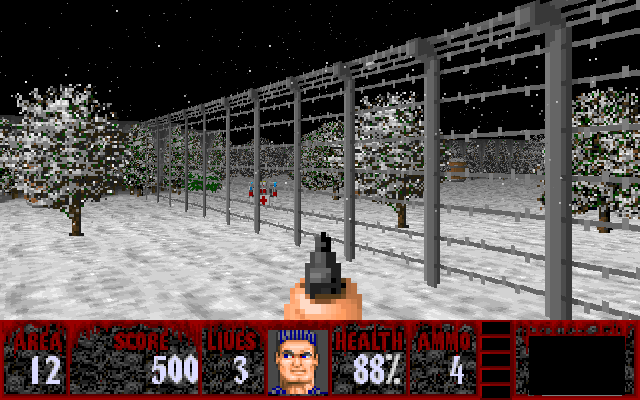
Some in the gaming community may have heard of a Wolfenstein 3D mod that was stirring up some controversy. Elder-Geek reported on it, as did many others. The game was Sonderkommando Revolt, developed by Team Raycast, and it put the player in the role of a Sonderkommando in a Auschwitz during World War II.

For those who don’t know, Sonderkommandos were death camp inmates who disposed of the millions of corpses during the Holocaust, and there were three revolts that took place between 1943 and 1944. The game stars Zalmen Gradowski (identified as Josef Goldenberg in the story synopsis), who, upon escaping execution, goes on a rampage to exact revenge on as many Nazis he can, saving as many Jews he can in the process.
The game was slated for release next month, but pressure from the Anti-Defamation League and many others have resulted in its cancellation. An ADL spokesperson told Kotaku “The Holocaust should be off-limits for video games.” I respectfully disagree. The gaming community cannot abide this cancellation–not only is it completely unjustified, but it only further discourages developers from tackling controversial subjects, ensuring that gaming will always remain a second class medium.

I could ramble on about why video games are perceived as a lesser medium and that their detractors are almost universally non-gamers, but that’s not why I’m writing this piece. As the title states, this is a call for support on the behalf of Team Raycast and developers everywhere who would dare to explore the darker aspects of humanity. A call for support on the behalf of the medium of video games.  Sonderkommando Revolt must be released.

“Its execution and imagery are horrific and inappropriate” said the ADL spokesperson. If someone at the ADL knows of a way to portray the Holocaust that isn’t horrific, I’d certainly be curious to hear that. There is no good way to portray such unimaginable atrocities, and doing so would be irresponsible. As for calling Sonderkommando Revolt “inappropriate,” that is an accusation directed towards the medium of video games rather than the content of the title itself.

The mere fact that it is a video game depicting the Holocaust is enough to be inappropriate in the eyes of some, and therein lies the problem. There’s no way of convincing the uninitiated that video games have unique abilities to relay information, stories, and emotions. Rather than doing that, I’d like to approach it from another angle.

Watch this teaser for the game. (The YouTube version has since been set to private.)  Chances are, you’ll feel the greatest moment of revulsion at the 33 second mark, when the player witnesses a wall of mutilated corpses, crudely rendered in the Wolf3D engine, but shockingly powerful nonetheless. That feeling you have in the pit of your chest–the collective guilt of all humanity–is it so wrong that a video game evoked such a feeling?
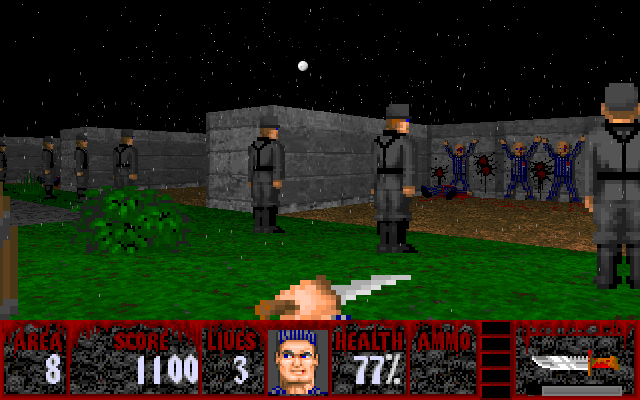
Granted, video games have been, since their inception, all about fun and entertainment. But there’s a point in any medium’s rise to wide social acceptance where statements must be made. Films had to stop being brief windows of reality or fantastic voyages to the moon, and so must video games graduate to a new level of art.

The problem is that with video games being so inextricably linked with entertainment, it seems impossible for the outside viewer to fathom that a video game can do other things. A video game can make the player think. A video game, based solely on the merit of interactivity, has more power to influence the player than any other medium. A video game about the Holocaust isn’t going to be “fun” just because it’s a video game, just as a film, a medium largely in pursuit of entertainment, won’t be enjoyable to watch should it choose to examine the Holocaust.

You may have seen historical footage of the Holocaust, or films based on it. You may have read about it. But there’s always a degree of distance when consuming other mediums. I don’t deny the power of film or books to completely envelop the viewer or reader, but a video game has the potential for previously unthinkable levels of immersion. Immersion that could leave to a greater level of understanding and empathy.

Some might say the crude graphics trivialize the horrors that occurred at concentration and extermination camps during the war, but one could argue that the simple graphics, just barely enough to be called representative, are in many ways more effective than current generation graphics. Then there’s the obvious point that creating this game in anything other than the Wolf3D engine would have required a lot more time and money, neither of which need be wasted while video games are still “just video games.”

I am just one writer for an independent gaming site, and while I believe that my fellow staffers will stand by me, there needs to be a veritable movement if this game is to be published and video games are to be afforded the rights they deserve as a medium. Sonderkommando Revolt is in a unique position, free from constraints of a publisher with a reputation to preserve or a massive budget to recoup. This game must be released.

And thus I call for support. I call for support from network and independent gaming journalists. From bloggers, vloggers, and webcomic creators to developers, publishers, and, most importantly, everyone who considers himself a gamer. Anyone who wishes to see our medium progress. I may be naive, but I believe that, with enough support, Team Raycast will release the title that they’ve spent four years making. I believe that they will do so confident that the rest of the gaming community will be there behind them, ready to weather the storm.
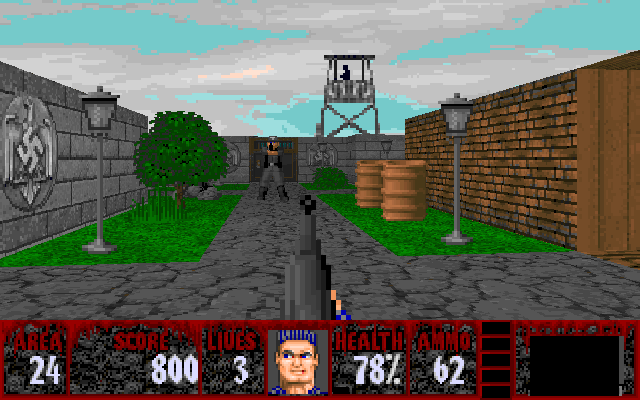
However, having never played the game, I cannot talk about how tastefully it approaches the subject matter.  The trailer leads one to believe that it’s done with as much realism as the Wolf3D engine will allow, which, presumably, means that the protagonist will invariably die just as those who revolted at Auschwitz did.  For all I know, the game might very well be offensive and inappropriate in its treatment of the events.  But the fact that it was all but canceled so close to its release simply because it’s a videogame about the Holocaust is something that should not be tolerated.

My main point is that the cancellation of a primitive mod of a decades old game sets a dangerous precedent.  The cancellation of titles like Luc Bernard’s Holocaust game Imagination is the Only Escape and the hotly debated Six Days in Fallujah has already proven that larger publishers will not take the necessary risks.  If this hesitation extends beyond the independent gaming industry and even into the modding community, then we’re sunk.  I believe that there is room for a powerful but tasteful Holocaust video game, but with each controversial title that is shot down, we move further and further from that game and, most importantly, the freedom for video game developers to create what they want.

For all I know, the game could be tasteless beyond relief and unnecessarily grotesque, but the fact that it may never be played and we’ll all be guessing as to how it handled the sensitive subject matter because of the over-exposure caused by a trailer just doesn’t sit right with me.  The trailer was clearly made to elicit some response.

There’s tasteless film.  Tasteless literature.  Tasteless music.  Video games should have the right to make the same mistakes, and should something be created and released that is beyond reprehensible, then we shall rise above it.  Just as filmmakers divorce themselves  from the tasteless films made every year, so will legitimate video game developers.  They will also be encouraged to do better, and, in the long run, our medium will flourish and evolve.

24 Dec

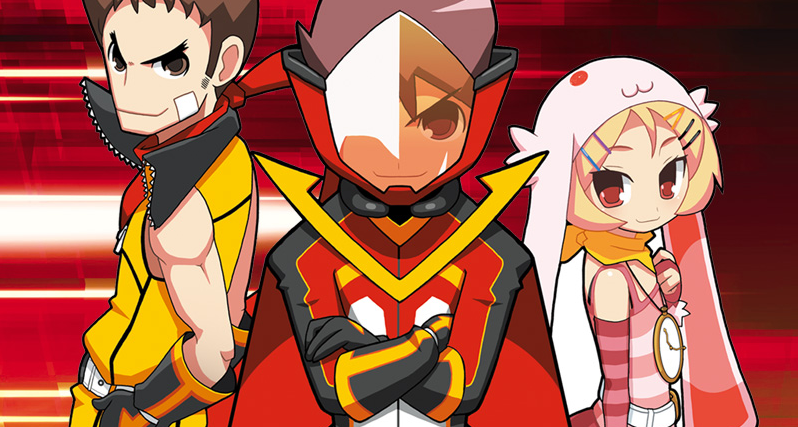
In addition to being quite the mouthful, Z.H.P. Unlosing Ranger vs Darkdeath Evilman is the title of yet another Nippon Ichi Software RPG for the PlayStation Portable. Priding itself on its unique approach to the dungeon crawler & tactical RPG genre (and, if you wanna get technical, the roguelike sub-genre) and treating everything with an appropriate level of irreverence, Z.H.P. is unlike anything out there. But then again, that’s usually how it goes with NIS titles. For better or for worse, they usually stray from the norm, and Z.H.P. is no exception.
The game presents itself in the form of a typical Saturday morning cartoon, and the script fits the same description. The story involves Darkdeath Evilman attempting to bring about the apocalypse by killing a being called the ‘Super Baby,’ an infant with strong defenses but no offensive capability. That’s where the Unlosing Ranger comes in–with powers granted by a magical utility belt, he’s the only hero currently around that is able to tackled Darkdeath Evilman. 20 minutes late to the final battle for the world, Unlosing Ranger is hit by a car and hands over his utility belt to an innocent bystander.

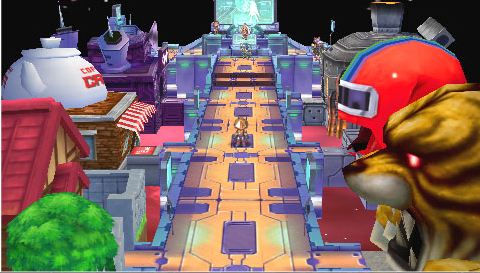
Behold Darkdeath Evilman

The player takes up the mantle of the Unlosing Ranger and promptly gets killed by Darkdeath Evilman. Once dead, you’re transported to the ‘Bizarro Earth,’ an alternate version of the world that’s essentially a massive network of dungeons and battlefields. It is here that you must level up enough so that you may return to Earth, defeat Darkdeath Evilman, and save the Super Baby.

By this point, you should realize that the storyline is not the reason you play Z.H.P., though it fortunately injects enough comedy to make some of many cutscenes and dialogue sequences worth watching. The opening exposition takes about an hour, followed by a multi-tiered tutorial that everyone will want to take before facing the essentially infinite number of randomly generated dungeons.

The battle system and everything else is interwoven. Presented in an isometric style similar to other tactical and strategy RPG’s, Z.H.P. functions on similar principles, but has no movement restrictions. Confrontations are entered when the character is seen by the enemy, and there is no running from them. The entire system can seem complicated at first, but the gradual introduction of new elements and the fact that the game lets you play it how you want to is a great help.

You have a health and an endurance bar, the former of which is drained in the typical manner, and the latter of which decreases slowly over time and can be replenished by food. Players can attack using weapons or throw items and even other enemies, and while movement isn’t restricted to turns, regular and special attacks are. The strategy comes from knowing when to approach and engage enemies, how to use status effects to your advantage, and how to manage the sometimes unreasonably fast degradation of weapons and armor. You can only carry as many items as your bag will hold, and the rest must be stored in town.

The town can be customized with numerous shops, all of which provide support to the player.

Dying in Z.H.P. is a frequent occurrence, and as such, it’s treated differently. Upon kicking it, you lose all of your items and gold, and your level resets to 1. However, and this is a very big, your stats remain the same. That means that whenever you die, you revive as a stronger character. As a result, everything in the game has an ethereal nature to it. You’ll usually end up equipping weapons you find in dungeons and throwing them when they break just because there’s bound to be more lying around later on. In fact, the typical ‘hoarding’ mentality of RPG gamers will serve no purpose here, and it relieves a bit of stress to know that you can use whatever items you have for the conflict at hand and not fear some larger battle in the future.

Cutscenes and character portraits are all handled using crisp anime style drawings, and the game world is rendered in full 3D. Unfortunately, the character, enemy, and item sprites themselves are blurry and of a lower resolution than the world around them. Considering the quality of everything else, this is very disappointing. Music is what you would expect. Nothing stands out as being phenomenal when compared to some of the greater video game compositions, but it’s the kind of music that can be listened to for the hours upon hours many players will spend with the title.  The soundtrack has an appropriate mixture of full orchestral themes and more ‘poppy’ tunes.

In the end, your enjoyment of Z.H.P. is based solely on how you take to the battle system. It’s more accessible than the typical tactical RPG battle system, but it doesn’t sacrifice much strategy for playability. The storyline and characters will amuse some and annoy others, and the presentation is the only thing that is even remotely lacking. If you’re hankering for a good tactical RPG, then Z.H.P. should tide you over until the release of Tactics Ogre.

22 Dec

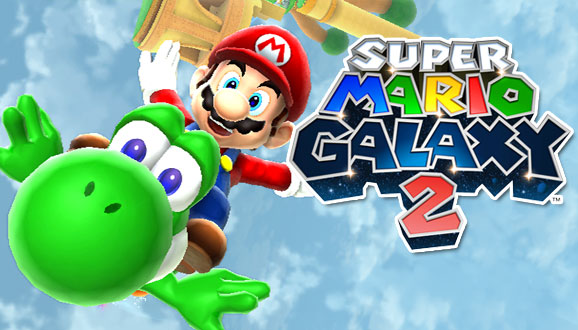
Super Mario Galaxy 2 is intended as retcon to the story of the original rather than an outright sequel. In this game, the Power Stars are once again stolen by Bowser (grabbing Peach as well naturally) and Mario must take off in hot pursuit across the stars. Early on, Mario rescues a baby Luma who leads his to a special planetoid. Commanded by a large Luma named Lubba, the planetoid is propelled by the Power Stars. Transforming to resemble Mario’s face (though one comments that it actually looks like Luigi) our hero rockets off to save Princess Peach yet again. Oh and save the universe, that’s kind of important too.

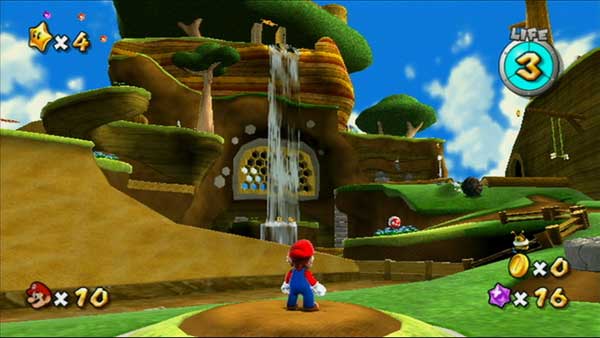
The basic visuals are the same as in Mario Galaxy, but given that the stages are all different and possess many new visual elements, the similar graphical outlay can be forgiven. Water and ice effects are especially impressive, with a feeling of serenity and calm that often comes with such world design. There are also worlds of fire, air, and snow that all possess their requisite elements and that affable Mario charm. The worlds in Galaxy 2 are just as fun to look at as they are to run through. Speaking of charm, there is something that is just inherently breathtaking about seeing Mario rocket into each new galaxy looking for a new Power Star, no matter how many times you see it. The best part is how Mario’s approach is different for each world and star, as if the developers knew that a lot of people would find this visual flair amazing.

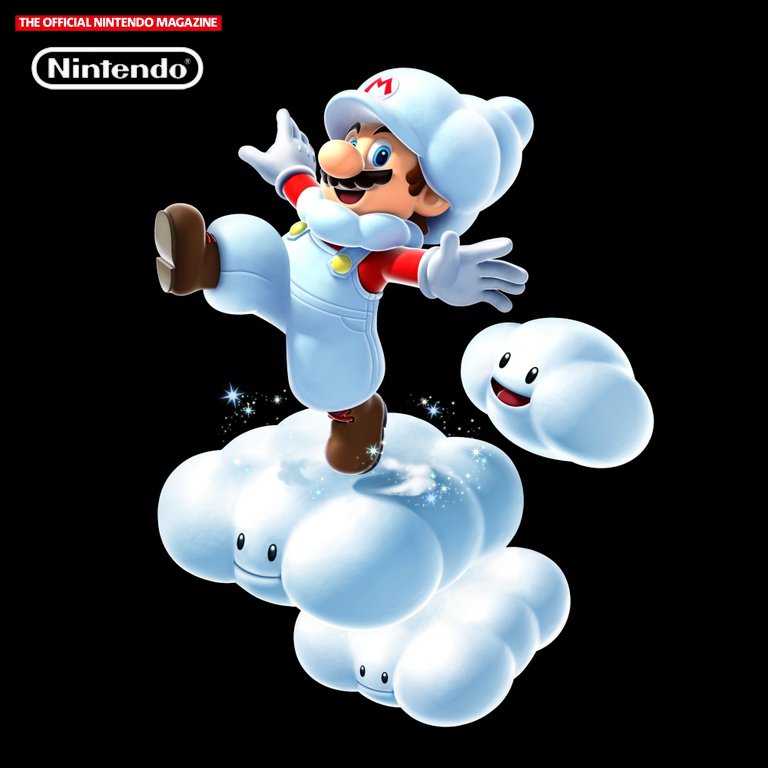
Mario also has some new powerups in this game that possess some interesting new visuals. Highlights include Cloud Mario’s fluffy platforms that remind me of Juggaman’s Cloud from Super Mario Brothers 3. It’s a fun visual alongside the three clouds that trail Mario’s hat when fully cloud powered. Rock Mario finds the plumber able to turn into a boulder and roll in any pointed direction. It’s always fun to flatten enemies like pancakes.

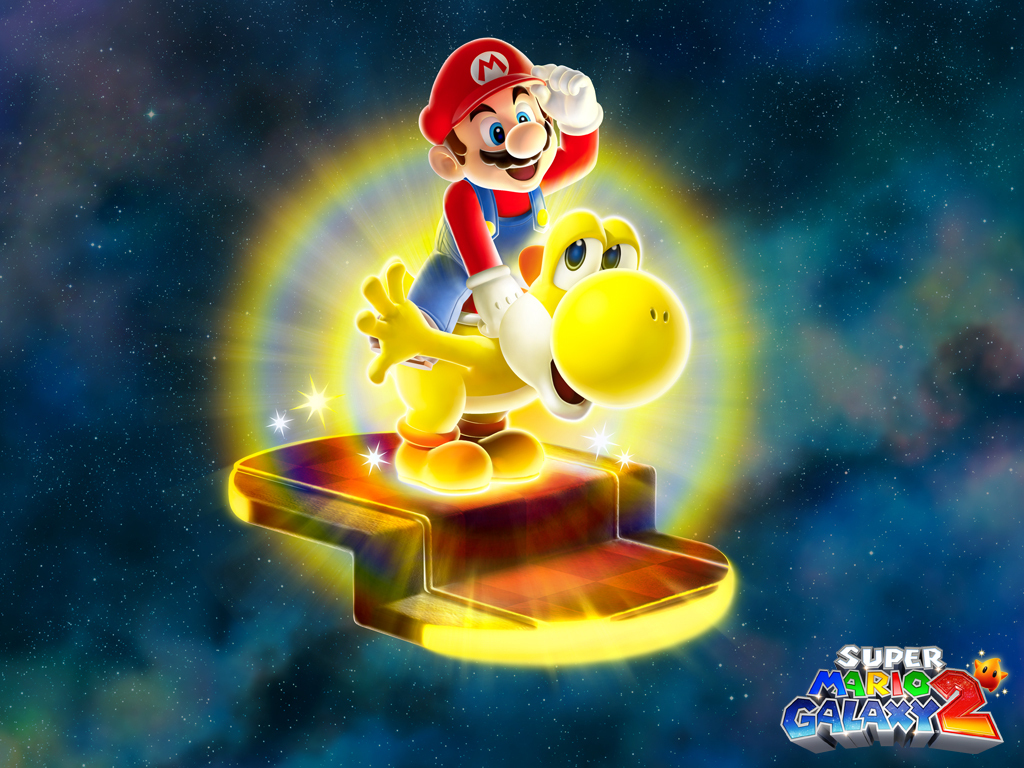
Yoshi (fresh from Mario Sunshine and a lot more functional) has new fruit powers: the Chile Fruit and the Blimp Fruit. While these names might not be quite right, their visuals are amusing. Yoshi becomes red and will run at high speed with the power of the Chile Fruit, scaling sheer walls and bumping into everything if your control isn’t precise. The Blimp Fruit turns Yoshi blue and allows him to rise straight into the air for a set period of air. It’s amusing to see the design, reminding me of Balloon Mario from Super Mario World. There is also the Golden Fruit, which allows Yoshi to see hidden passages, but stars based around that goal are a rare sight, so it’s a forgettable powerup.

Music in this game is fully orchestrated by a group of 60 members, 10 more than the score for the first Mario Galaxy game. The themes are all epic in nature, which is what comes with performing in such a style of music. Koji Kondo, the veteran Nintendo composer, is also on hand to spin new takes on classic Mario themes as well as some other new stuff. Even classic Mario pieces like the “Hurry Up” tune are larger-than-life and better than ever. I was also ecstatic to see orchestrations of the Cheese Bridge from Super Mario World, the Princess’ Secret Slide from Super Mario 64, and Bowser in the Lava World from Super Mario 64. It is a rare thing to see orchestrations done this well for an in-game score, as they are usually reserved for special CD’s released solely in Japan, like The Legend of Zelda: Sound and Drama or Super Metroid: Sound in Action.

Besides the fanservice present in these retro remixes, Mario Galaxy 2 has a superlative score of original pieces, covering many a genre of music. From the folksy country twang of the “Puzzle Plank Galaxy” to the epicness of the “Melty Monster Galaxy,” Mahito Yokota and Ryo Nagamatsu deserve much credit for these new pieces, sure to take their place alongside other classic Mario music. These are two composers that I’ll definitely be watching now!

The voice of Charles Martinet returns yet again to give voice to Mario and his many classic sound effects. Everything from the “yippie” of the super jump to the amusing nature of accidentally landing in lava is present, but I was wishing for more classic Mario vocals. Death sound effects are ordinary and boring, considering how often you hear them, and I was wishing for the classic “Mama Miaaaa!” as you fall to your doom. Luigi’s voice has been reduced as well, with nothing but a simple exclamation when super jumping, somersaulting, or dying. I actually prefer his extended “Mama Mia” when compared to his rotund brother, so its absence hurts my desire to hunt some stars with the green plumber. At least he plays a bit differently.

Gameplay is the same as the original 3D Mario game, Super Mario 64, in which you must find a certain number of Power Stars in each level. Each star involves several different types of gameplay, including platforming, puzzles, tough terrain navigation and fighting bosses. My favorite stars are the ones that shift the perspective to 2D, as in the older Mario games. These stars are often about precise movement rather than just trying to figure out where a star is. Most of the new powerups are designed with creative ways to hide stars in mind, so you can look forward to some unique challenges.

While the bosses are big and cleverly designed, the drama of fighting them is cut short by simplistic strategy. You’ll fight the same boss several times throughout the game with little change for each encounter. You pretty much just have to hit their projectiles back at them to inflict damage. Things change up a bit on the last required hit, but it still feels like a failure of imagination, especially how the final boss is supposed to be an epic encounter, yet he fights pretty much the same as every other boss. Disappointing.

Initial reaction to Super Mario Galaxy 2 was disapproval over its full price tag for what seemed to be an expansion. The truth of this is that not really much is changed from the original Galaxy. Yoshi isn’t used in that many stages (I miss the ability to use him whenever you want in Super Mario World) and a lot of the goals are similar to the original, making this more of an expansion pack. What you get out of the game will depend on how much you like Mario Galaxy or 3D Mario games in general. I myself always look forward to more of these types of games, even if they aren’t quite as fun as the sidescrolling Mario games. Be aware of the above before you venture off into the galaxy once more.